- English
- Español
- Português
- русский
- Français
- 日本語
- Deutsch
- tiếng Việt
- Italiano
- Nederlands
- ภาษาไทย
- Polski
- 한국어
- Svenska
- magyar
- Malay
- বাংলা ভাষার
- Dansk
- Suomi
- हिन्दी
- Pilipino
- Türkçe
- Gaeilge
- العربية
- Indonesia
- Norsk
- تمل
- český
- ελληνικά
- український
- Javanese
- فارسی
- தமிழ்
- తెలుగు
- नेपाली
- Burmese
- български
- ລາວ
- Latine
- Қазақша
- Euskal
- Azərbaycan
- Slovenský jazyk
- Македонски
- Lietuvos
- Eesti Keel
- Română
- Slovenski
- मराठी
- Srpski језик


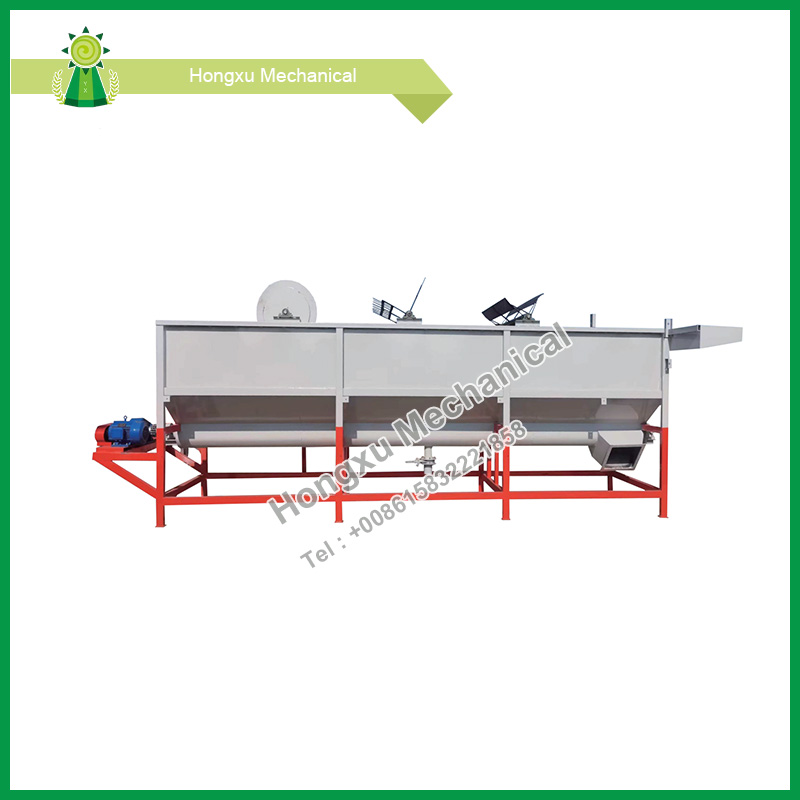
Plastic Washing and Separation Tank
The plastic washing and separation tank is a device launched by China Hongxu Machinery that integrates material sorting and cleaning functions, Utilizing the difference in buoyancy of water to achieve plastic buoyancy separation, Simultaneously remove impurities such as mud, paper scraps, oil stains, etc. carried in plastic fragments, Commonly seen in the plastic sorting and recycling industry.
Send Inquiry
Product Description
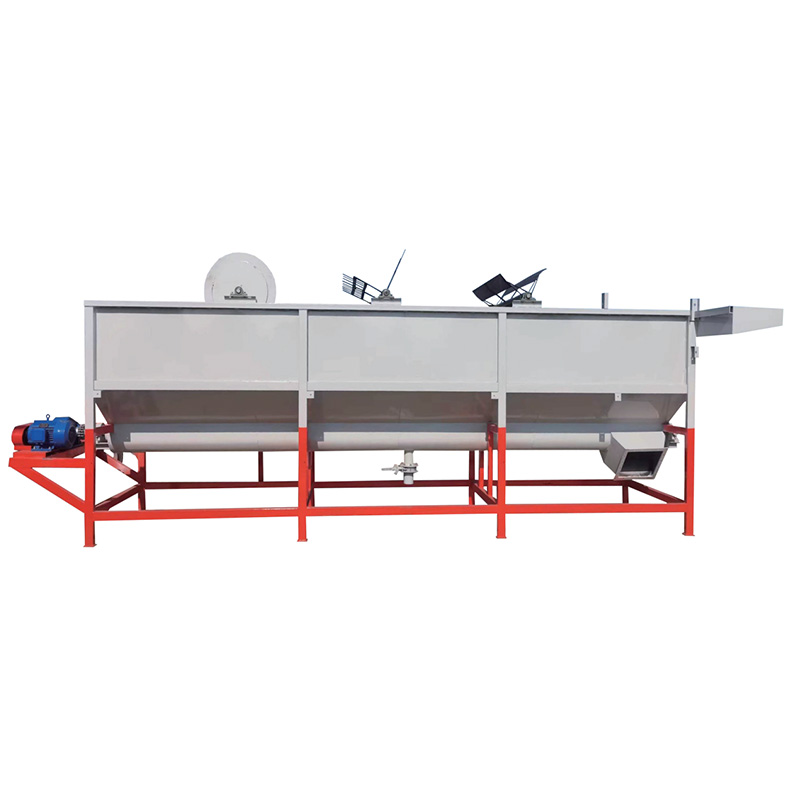
1. The plastic washing and separation tank uses water as the basic sorting medium, The input crushed materials are fully immersed and dispersed in the tank.
2. Plastic with a density lower than water floats to the surface of the water, Push from the upper pulley to the floating material discharge end.
3. Plastic with a density greater than water sinks to the bottom of the tank, Push by the bottom spiral conveyor mechanism to the discharge end of the sediment.
4. Sediments and heavy impurities settle to the bottom of the tank, Regularly discharge through dedicated sewage outlets for centralized discharge.
Conventional Parameters:
| Type Number | Clear water rinsing tank | Deep water rinsing tank |
| Size Overall Dimensions | 1.2 meters wide * 5 meters long | 1.5 meters wide * 6 meters long |
| Power Motor Power | 5.5 kW | 12.5 kW |
| Material Construction Material | Q235 carbon steel/201 stainless steel | Q235 carbon steel/201 stainless steel |
| Hourly OutputProcessing Capacity | 1-3 t | 2-4 t |
Note: The above specifications are common models in the market, If customization is required, parameters can be provided.
Purchase suggestion:
1. The overall structure of the clear water rinsing tank is relatively shallow, The water volume is relatively small; Deep water rinsing tanks have a larger water volume, Adequate depth space.
2. The clear water rinsing tank uses clear water as the medium, Relying solely on buoyancy differences at regular water depths for sorting; The deep water rinsing tank relies on the deep water to extend the material's sinking and floating path, Industrial salt and other auxiliary agents can also be added, Separate more thoroughly.
3. Clear water rinsing tanks are more suitable for production lines with low mixing and single materials, Conventional cleaning and sorting of PP woven bags and PE films; Deep water rinsing tanks are more suitable for scenarios with high mixing and high requirements for sorting purity, The middle and later stages of processes such as home appliance crushing materials and PET bottle recycling.
Advantages and Characteristics:
1. Wide range of compatible materials: Plastic washing and separation tank can separate common plastics such as PET, PP, PE, PVC, etc.
2. High degree of customization: Different specifications can be customized according to production capacity requirements, Adapt from small output to large production lines.
3. Low operating costs: Simple and reliable structure, Easy to maintain, Long term use has a low failure rate.
4. Wide adaptability: Can be used independently as a standalone device, It can also be fully integrated into the entire waste plastic cleaning and recycling production line.
Common problem:
1. Incomplete material sorting, There are situations where floating materials are mixed with sinking materials or floating materials are mixed with sinking materials.
Resolvent: Reasonably control the amount of feed, Disperse the material in water, At the same time, regularly clean the accumulated sediment at the bottom of the tank, Avoiding the accumulation of sediment and raising the water level to affect the layered space.
2. The sorting effect deteriorates, Can plastics of similar density be classified as impure.
The Plastic Washing and Separation Tank allows operators to adjust the amount of industrial salt added as needed to maintain a reasonable concentration while ensuring the purity of the water circulation system and preventing long-term accumulation of plastic debris in the water, which could affect system stability.
Related Category
Plastic Crusher
Friction Machine
Plastic Dryer
Rinse Tank
Debaler Machine
Label Removal Machine
Rotary Sieve
Ton Bag Packaging Machine
Send Inquiry
Please feel free to give your inquiry in the form below. We will reply you in 24 hours.